Hernias
Expert evaluation and advanced surgical treatment for all types of hernias.
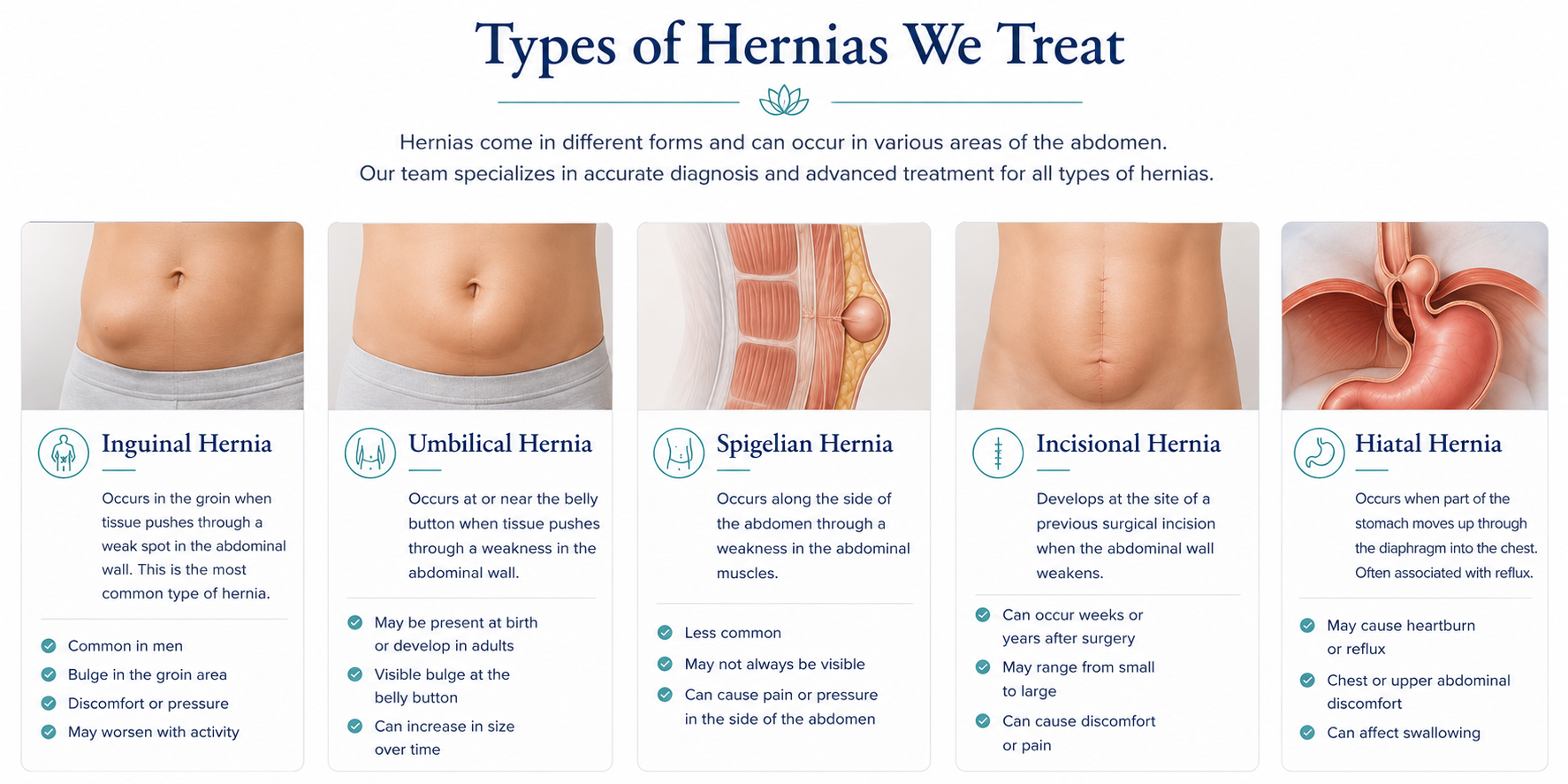
A hernia occurs when tissue or an organ pushes through a weakened area of the surrounding muscle or connective tissue. Hernias can cause a visible bulge, pressure, discomfort, or pain—although some cause very few symptoms.
Treatment is individualized based on the type and size of the hernia, your symptoms, previous surgeries, and overall health.

Signs & Symptoms
A visible or noticeable bulge in the abdomen, groin, or near a previous surgical incision
Pain, aching, or discomfort, especially with lifting, coughing, bending, or physical activity
Pressure, heaviness, or a pulling sensation in the affected area
A bulge that becomes more noticeable when standing, coughing, or straining
Tenderness or discomfort around the hernia
Increasing size of the bulge over time
Symptoms that improve when lying down
For hiatal hernias: heartburn, acid reflux, regurgitation, chest or upper abdominal discomfort, or difficulty swallowing.
Symptoms can vary, but may include:
When surgery is appropriate, the approach is tailored to the individual patient and the specific hernia.
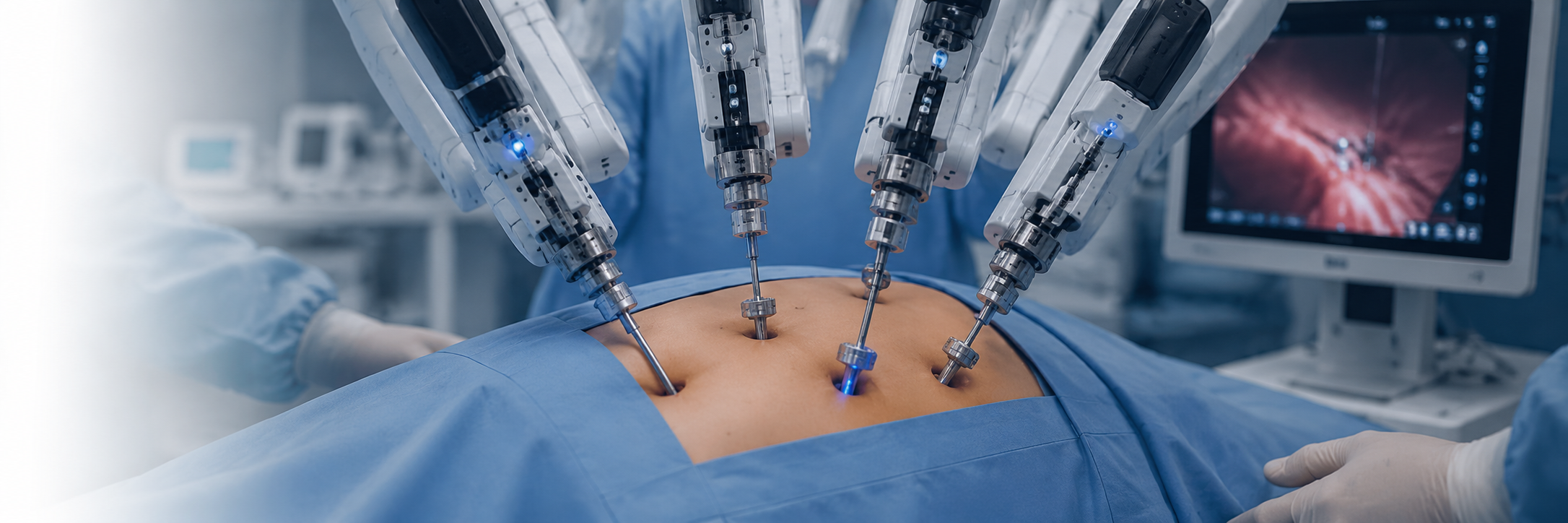
Depending on your condition, treatment may include open, laparoscopic, or robotic hernia repair. Minimally invasive techniques can allow surgeons to repair the hernia through small incisions and, for appropriately selected patients, may offer benefits such as less postoperative discomfort and a faster return to normal activities.
Hernia Repair Options